

M.A.R.C.U.S. Support Services for
Grieving Mothers
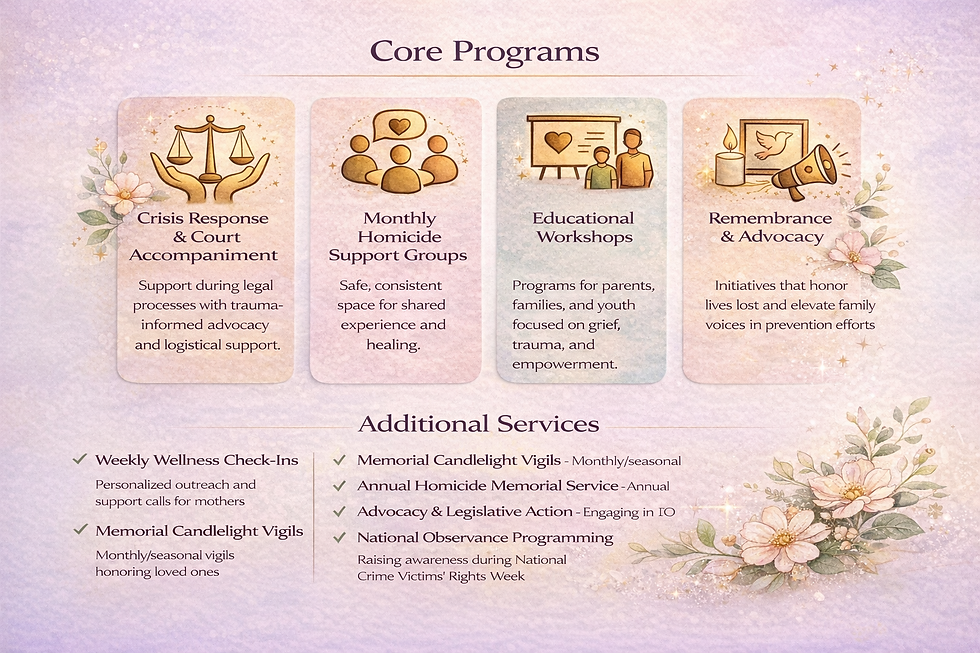
1. Trial Support Program
Stand beside grieving mothers during the most painful legal chapters.
-
Emotional companionship during hearings
-
Meal delivery throughout trial weeks
-
Courtroom advocacy and logistics coordination
“We don’t let mothers walk into court alone.”
2. Monthly Grief Support Groups
Safe, restorative spaces to share, process, and heal.
-
Guided conversations and grief education
-
Youth activity stations and adult engagement circles
-
Guest speakers offering hope and tools for recovery
3. Weekly Wellness Check-Ins
A simple call. A powerful reminder that she is not alone.
-
Personalized phone, video, or text check-ins
-
Listening support and resource referrals
-
Volunteer and peer support network
4. Memorial Candlelight Vigils
Honor the lives lost. Unite communities in light and remembrance.
-
Monthly or seasonal vigils with speeches, music, and prayer
-
Open space for families to share stories and tributes
5. Homicide Victim Memorial Service
A dignified annual ceremony to reflect, remember, and restore.
-
Held in partnership with city leaders and clergy
-
Reading of names, symbolic rituals, and healing messages
6. Advocacy & Legislative Action
Empowering mothers to shape policy and challenge injustice.
-
Training on public speaking and civic engagement
-
Advocacy days at city council or legislature
-
Support writing letters, petitions, and testimony
7. National Observance Programming
Lift the voices of grieving mothers during key national dates.
-
National Day of Remembrance for Homicide Victims (September)
-
National Crime Victims’ Rights Week (April) Includes public events, awareness campaigns, and media outreach
8. Legacy Quilt Project
A healing art initiative where mothers stitch a square in honor of their child.
-
Each quilt tells a story of love, loss, and legacy
-
Displayed at city halls, rallies, and community centers
9. Mother’s Reflection Retreat
A gentle weekend of quiet, comfort, and connection.
-
Held seasonally in a peaceful setting
-
Guided journaling, meditation, and remembrance activities
“A sacred space to breathe again.”
Community-Based Projects for Violence Prevention & Family Restoration
1. "Parent Power" Workshops
Focus: Equip parents and caregivers with tools to reclaim household stability
-
Topics: Conflict resolution, digital safety, mental health first aid, setting boundaries
-
Led by: Local therapists, educators, and advocacy leaders
-
Format: Monthly in-person sessions + downloadable workbook
Goal: Restore parental confidence and skill-building through empowerment and education.
2. Family Restoration Circles
Focus: Healing conversations for families fractured by violence, trauma, or legal system involvement
-
Guided by professional facilitators, faith leaders, and trauma-informed mentors
-
Includes shared meals, storytelling, and goal-setting activities
Goal: Encourage reconciliation, understanding, and new foundations for growth.
3. Youth Accountability & Empowerment Program
Focus: Early intervention for at-risk teens
-
Weekly sessions on emotional regulation, peer pressure, legal consequences, and life skills
-
Includes service hours and mentorship with credible messengers
Goal: Help teens visualize positive paths, take responsibility, and rebuild their future.
4. Gun Safety & Responsibility Campaign
Focus: Prevent access to firearms among minors and encourage responsible ownership
-
Educational workshops for families on safe storage and legal accountability
-
Partnerships with law enforcement for lockbox distribution and awareness
Goal: Reduce gun-related incidents by closing the access gap.
5. Digital Detox & Social Media Literacy Series
Focus: Address online triggers of violence, peer comparison, and misinformation
-
Youth-led discussions + parent courses on cyberbullying, glorification of weapons, and media literacy
Goal: Empower families to understand and manage digital influence effectively.
6. Community Healing Projects
Focus: Use art, music, and storytelling to transform pain into beauty
-
Memorial murals, poetry slams, and youth photography exhibits featuring themes of resilience
Goal: Foster pride, honor lost lives, and inspire creative outlets for coping.
7. Faith & Civic Partner Roundtable
Focus: Build a united front across sectors to address root causes of violence
-
Monthly collaborative meetings with churches, law enforcement, schools, and nonprofits
Goal: Align resources, share insight, and execute citywide solutions together.
Legislative Reform Priorities for North Carolina
1. Juvenile Murder Accountability Act
Goal: Allow discretionary adult-level prosecution for juveniles (ages 14+) who commit homicide, based on severity, evidence, and community impact.
“Youth does not absolve murder. Communities deserve justice that reflects the gravity of loss.”
2. Parental Accountability Enhancement Bill
Goal: Hold parents fully accountable when their negligence or complicity directly contributes to violent crimes committed by their children.
“If discipline is absent, accountability must be present.”
3. Relinquish Juvenile Oversight to District Attorneys
Goal: Transfer authority for juvenile homicide cases from the Department of Juvenile Justice to the District Attorney’s Office.
-
Ensures prosecutorial discretion in serious violent offenses
-
Aligns community impact with sentencing decisions
“Let those who fight for justice lead the fight to prosecute.”
4. Justice System Resource Expansion Act
Goal: Increase state funding for:
-
Police Departments to support community safety and violent crime investigation
-
District Attorney Offices to expand victim support staff, trial prep teams, and juvenile prosecution capacity
-
Judges & Court Infrastructure to ensure timely and equitable trials
“Justice delayed is justice denied—especially for grieving families.”
5. Safe Firearm Storage Law
Goal: Mandate and enforce responsible gun ownership in homes with minors
“Secure the weapon. Secure the future.”
6. Victim Support Equity Act
Goal: Standardize and fund homicide support services across counties
“Every grieving mother deserves more than condolences. She deserves care.”
7. Restorative Justice & Prevention Fund
Goal: Fund grassroots programs that work directly with families and at-risk youth
“Build community before tragedy strikes.”

